




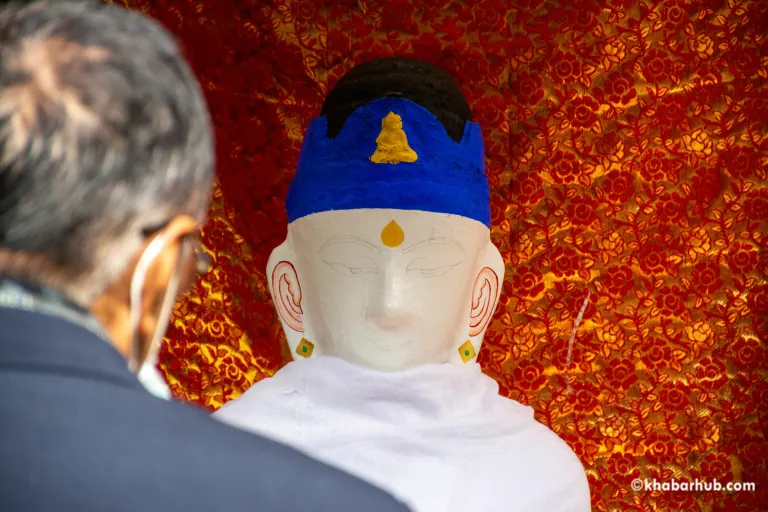
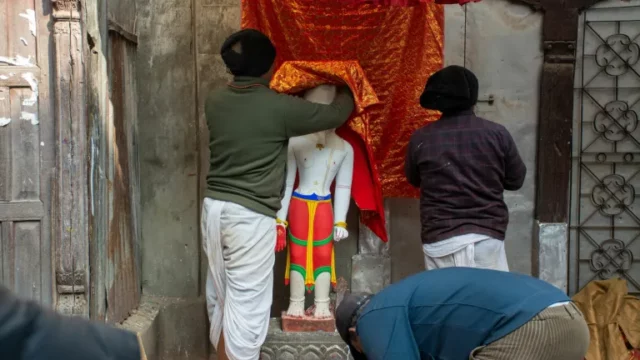
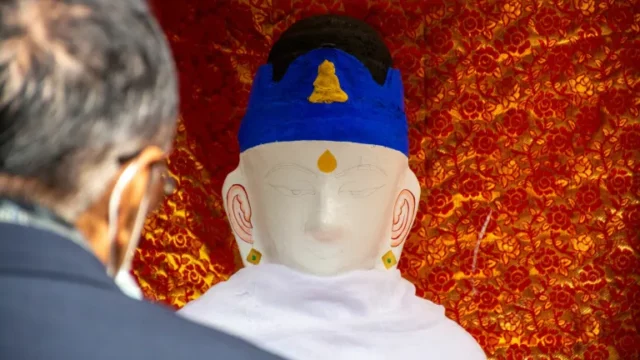
KATHMANDU: The sacred process of painting has commenced on the revered statue of Seto Machhindranath, also known as ‘Aryaavalokiteshwar,’ considered the deity overseeing rain and the changing seasons.
The intricate painting of the statue of ‘Aryavalokiteshwara,’ revered as the God of rain, is now underway at Janabahal near Ason in Kathmandu.
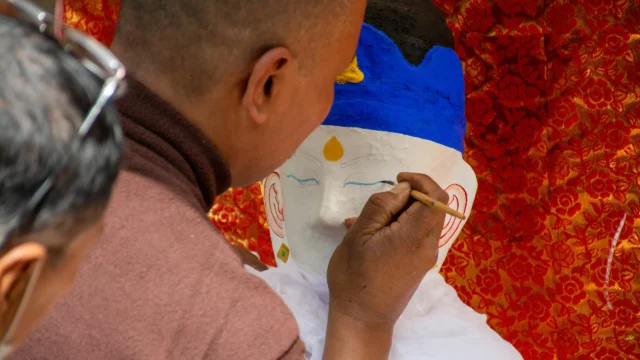
Local artist Narendra Chitrakar shares that the coloring process begins after the idol of Machhindranath is bathed in “Mahasthan” on Ashtami Tithi, following assembly devotion on Paush Shukla Saptami.
He details that the coloring ritual will span from Nawami to Purnima, with the Newari term ‘Lampuchhyagu’ describing the act of dyeing the white Machhindranath.
Significance of Seto Machhindranath
Seto Machhindranath holds a sacred position as the God of life within the Newar community of Kathmandu.
Chitrakar explains, “White Machhindranath is worshipped to safeguard him from suffering throughout his existence.”
Referred to as ‘Arya bho Lokeshwar,’ the deity is sought after for health benefits, especially during times of illness.
Despite being a pure Newari community, locals adhere to the tradition that only Guruju (Shakya Bajracharya) can touch the white Machindranath.
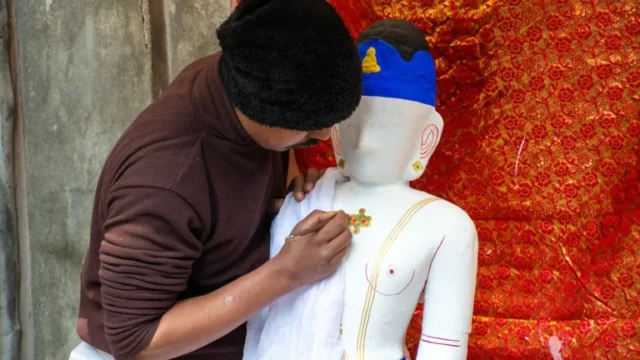
The statue of ‘Aryavalokitesvara’ has recently been brought out for the painting process.
Local Perspectives and Traditions
Ratna Keshari Shrestha, a local, expresses that witnessing Seto Machhindranath brings joy, good health, longevity, and financial prosperity.
Shrestha shares, “After the coloring of Seto Machhindranath, the ritual of 10 human-like actions continues until the full moon, culminating with the idol receiving new garments on the full moon day.”
During the painting process, the idol of Seto Machhindranath, removed for adornment, is temporarily housed in an urn instead of the usual altar.
Local Prakash Maharjan reveals, “At this time, the life-giving power of the Lord is kept inside the Kalash with a white handle.”
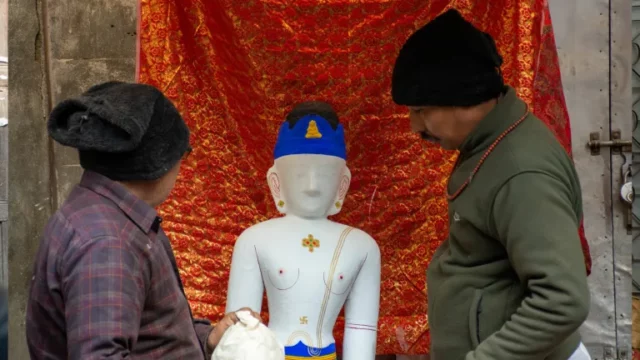
He further explains, “On the full moon day, after completing the rituals of coloring, beautification, and the ten prescribed actions, the statue is enshrined and finally returned to its original place in the temple. Subsequently, on Seto Machhindranath’s chariot procession day, the idol is taken from here to Jamal.”
Adding a unique perspective, Narendra Chitrakar notes, “Lord Buddha came and sat on the head of Machhindranath for protection because Machhindranath, in his commitment to safeguarding all living beings, never sat down.”






Comment