



In the annals of Nepal’s political history, few figures have garnered as much attention as Pushpa Kamal Dahal “Prachanda”.
Once heralded as a revolutionary leader who fought for the marginalized, his trajectory from a figure of hope to a failed Prime Minister serves as a stark reminder of the volatility of political power and the fragility of revolutionary ideals.
Prachanda’s rise to prominence was marked by the Maoist insurgency, which aimed to address deep-rooted inequalities in Nepali society.
However, the very essence of his revolutionary agenda has become entangled in a web of contradictions.
As a political leader, he has exhibited profound instability, often abandoning commitments made to both allies and constituents.
His tenure has been characterized not by democratic reform but by an alarming reluctance to amend the constitution and address pressing national issues.
A stable political environment and the enhancement of republican democracy necessitate the emergence of new leaders who can genuinely represent the aspirations of the Nepali people.
In contrast to leaders who successfully navigate the turbulent waters of political change, Prachanda appears mired in a politics of power consolidation.
His focus on elevating family members and allies to positions of influence within his secretariat underscores a troubling trend toward nepotism, raising questions about the integrity of his leadership.
This shift has alienated many of the very individuals who fought alongside him during the Maoist insurgency, leaving them wounded and disillusioned.
Moreover, Prachanda’s approach to political discourse has often veered into threats against opposition parties, challenging them without substantive evidence.
This trend not only undermines democratic values but also fosters an atmosphere of fear and repression.
The reluctance to address the Truth and Reconciliation Commission (TRC) and corruption within the ranks of former combatants further exemplifies his administration’s shortcomings and failure to embrace accountability.
The decline of Prachanda mirrors the trajectories of other once-prominent leaders across the globe who have succumbed to similar downfalls.
It is imperative for Nepal to learn from these lessons and chart a course that prioritizes the voices of its citizens over the ambitions of individual leaders.
Leaders like Robert Mugabe in Zimbabwe and Muammar Gaddafi in Libya transitioned from revolutionary icons to figures associated with corruption, repression, and decline.
Their fates serve as cautionary tales, illustrating the dangers of entrenching power and neglecting the very principles that once fueled their rise.
As Nepal stands at a crossroads, it is essential to recognize that the path forward does not hinge on Prachanda’s leadership.
A stable political environment and the enhancement of republican democracy necessitate the emergence of new leaders who can genuinely represent the aspirations of the Nepali people.
The erosion of Prachanda’s influence may indeed provide an opportunity for revitalizing democratic discourse and ensuring that the struggles of the past inform a more equitable future.
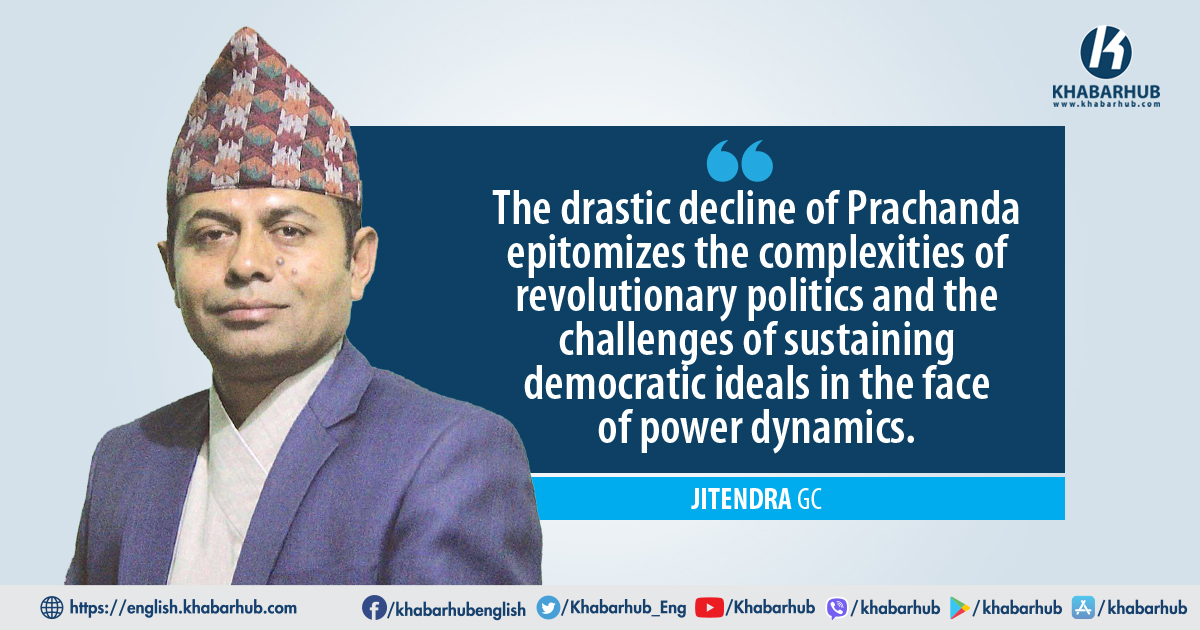
In conclusion, the drastic decline of Prachanda epitomizes the complexities of revolutionary politics and the challenges of sustaining democratic ideals in the face of power dynamics.
It is imperative for Nepal to learn from these lessons and chart a course that prioritizes the voices of its citizens over the ambitions of individual leaders.
Only then can the nation hope to achieve the stability and progress that its people deserve.





Comment