




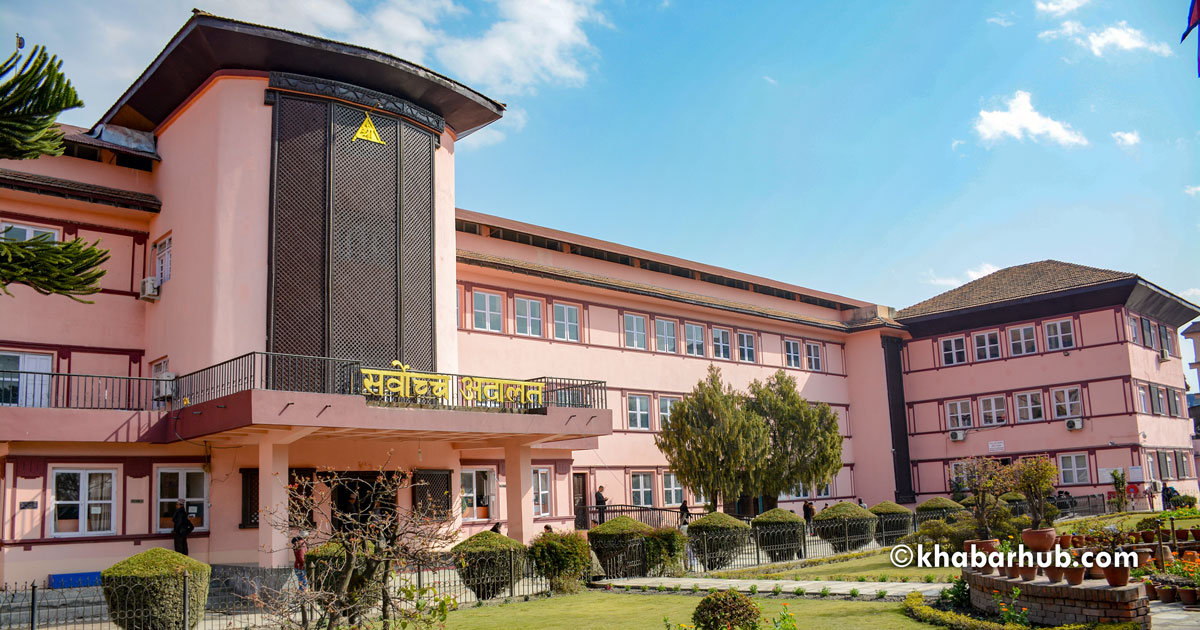
KATHMANDU: The Supreme Court (SC) has declared that privately owned land exceeding the legal ceiling set by the law must be confiscated.
The SC ruling, embedded in the decision regarding the Giri Bandhu Tea Estate Pvt Ltd case, provides grounds for the government to claim ownership of land that has been deceptively retained by individuals to circumvent the legal provisions outlined in the Land Reform Act of 2021.
In 2021 BS, King Mahendra Shah instituted a land ceiling as part of land reforms. However, some individuals managed to acquire more land than the prescribed limit, citing it for industrial purposes.
Taking advantage of the legal privileges granted to industries allowing them to exceed the land ceiling, Giri Bandhu established a tea estate covering 343 bighas, 19 ropanis, and 12 aanas in Jhapa.
The recent SC decision addresses the fate of land that surpasses the industrial land ceiling when the industry closes down or the land is sold.
The Supreme Court, in its Wednesday verdict, declared, “Generally, land exceeding the land ceiling should be confiscated.”
According to the court’s judgment, land, such as that held by Giri Bandhu, which exceeds the land ceiling, should be nationalized rather than repurposed for uses other than industry.
The court stressed that land exceeding the land ceiling should not be utilized for any purpose other than industrial and must ultimately become government property.
Consequently, the court has directed the government to manage land exceeding the land ceiling, taking into account factors such as the land area, tea production capacity, and overall legal and administrative aspects of land likely to be confiscated beyond the prescribed limit.






Comment