




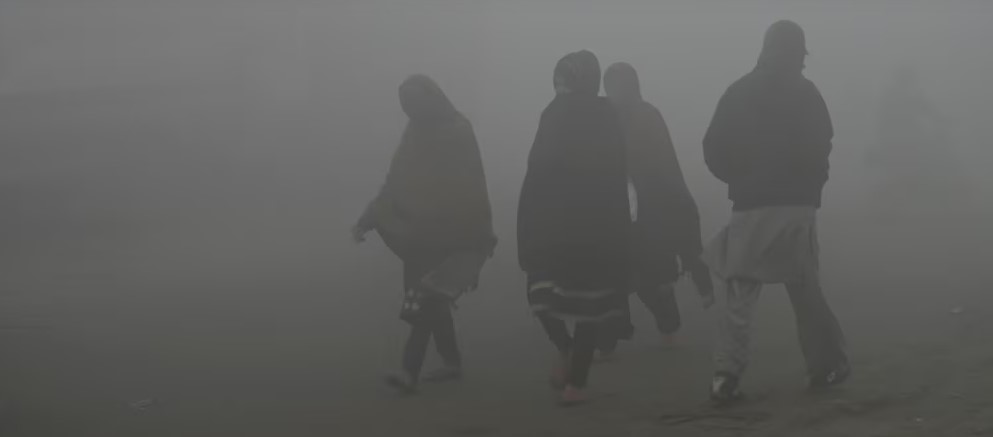
LAHORE, PAKISTAN: Artificial rain was used for the first time in Pakistan on Saturday in a bid to combat hazardous levels of smog in the megacity of Lahore, the provincial government said.
In the first experiment of its kind in the South Asian country, planes equipped with cloud seeding equipment flew over 10 areas of the city, often ranked one of the worst places globally for air pollution.
The “gift” was provided by the United Arab Emirates, said caretaker chief minister of Punjab, Mohsin Naqvi.
“Teams from the UAE, along with two planes, arrived here about 10 to 12 days ago. They used 48 flares to create the rain,” he told the media.
He said the team would know by Saturday night what effect the “artificial rain” had.
The UAE has increasingly used cloud seeding, sometimes referred to as artificial rain or “blueskying,” to create rain in the arid expanse of the country.
The weather modification involves releasing common salt — or a mixture of different salts — into clouds.
The crystals encourage condensation to form as rain.
It has been deployed in dozens of countries, including the United States, China and India.
Even very modest rain is effective in bringing down pollution, experts say.
Air pollution has worsened in Pakistan in recent years, as a mixture of low-grade diesel fumes, smoke from seasonal crop burn off and colder winter temperatures coalesce into stagnant clouds of smog.
Lahore suffers the most from the toxic smog, choking the lungs of more than 11 million residents in Lahore during the winter season.
Levels of PM2.5 pollutants — cancer-causing microparticles that enter the bloodstream through the lungs — were measured as hazardous in Lahore on Saturday at more than 66 times the World Health Organization’s danger limits.
Breathing the poisonous air has catastrophic health consequences.
Prolonged exposure can trigger strokes, heart disease, lung cancer and respiratory diseases, according to the WHO.
Successive governments have used various methods to reduce air pollution in Lahore, including spraying water on the roads, and weekend shutdowns of schools, factories and markets, with little or no success.
When asked about a long-term strategy to combat smog, the chief minister said the government needs studies to formulate a plan.
VOA




Comment