




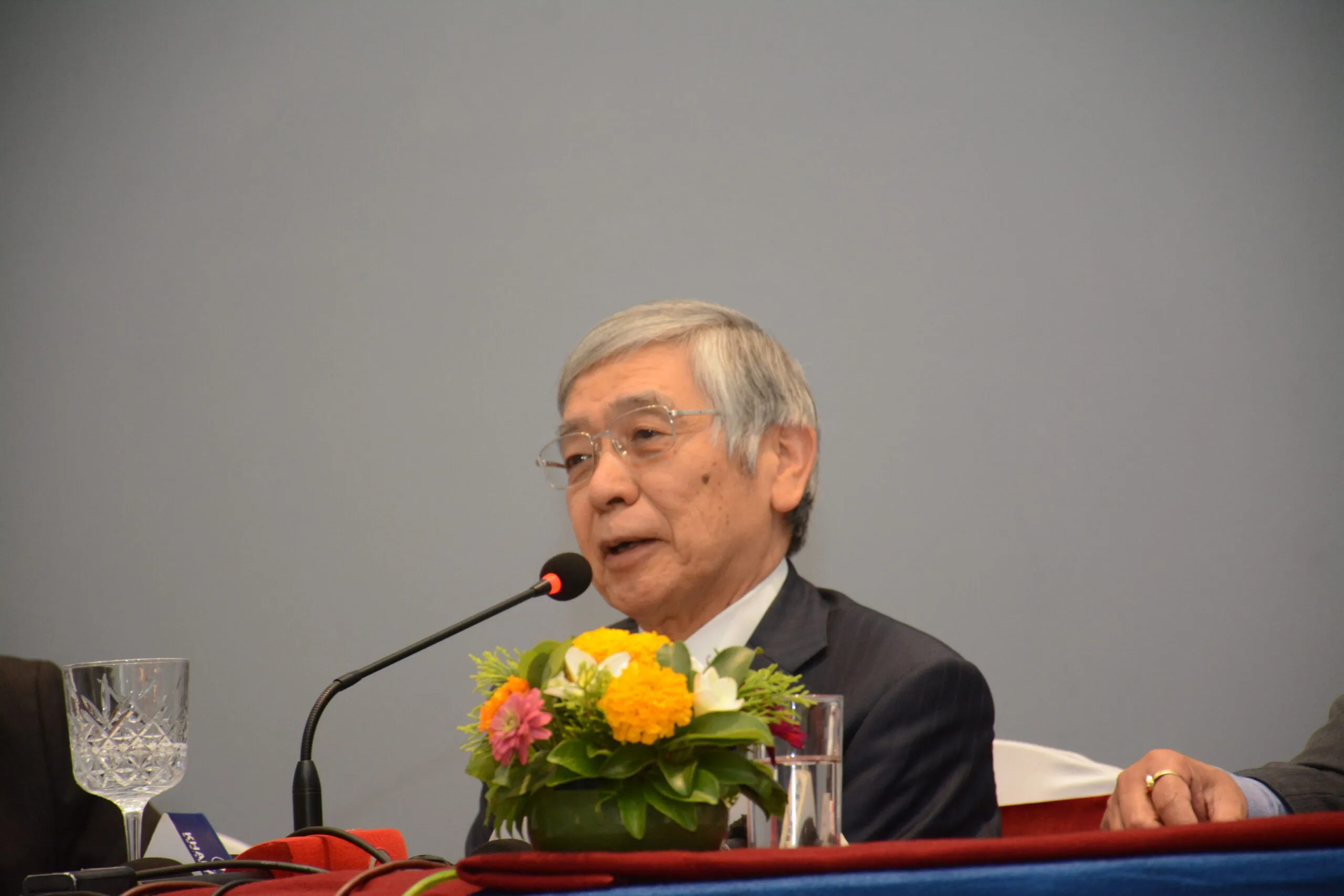
KATHMANDU: Former Governor of the Bank of Japan, Haruhiko Kuroda has emphasized that Nepal has the potential to strengthen its economy through the effective mobilization of its human capital and the optimal utilization of natural resources.
Speaking at a press conference organized by Khabarhub, Nepal’s popular online news portal, and the Institute for Strategic and Socio-Economic Research (ISSR) in Kathmandu, Kuroda, also the former President of the Asian Development Bank (ADB) stressed the importance of identifying key areas for economic prosperity.
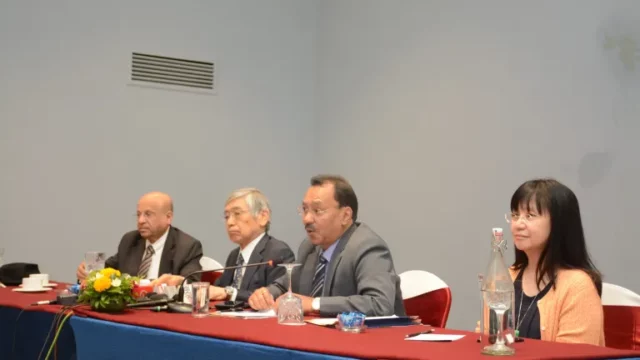
The press conference was held as part of the “Transformational Policy Discussion Series” organized by Khabarhub and the ISSR in Kathmandu,
Kuroda praised Nepal’s unique economic landscape and its potential for economic development, especially through its abundant human resources.
He highlighted the need to connect Nepal’s youthful workforce with production processes driven by the utilization of the country’s abundant natural resources.
Kuroda stated, “Nepal can harness its environmental potential by mobilizing its human capital and tapping into its natural resources, such as water and forests. Nepal should not miss the opportunity to fully exploit these resources,” adding that Nepal’s young workforce should be integrated into various production sectors to reap the benefits.
He also underscored the importance of infrastructure development, including roads, transmission lines, and communication networks, as a means to expand the economy.
Responding to a query about Nepal’s strategy to graduate from its least-developed country status by 2026, Kuroda recommended prioritizing infrastructure construction, enhancing access to education and healthcare for citizens, and promoting private sector investment.
Kuroda also cautioned against underestimating Nepal’s escalating public debt, noting that the country’s economic growth rate, returns on investments, and capital formation were all constrained.
He emphasized that an increasing ratio of public debt to GDP and a significant portion of the annual budget allocated to servicing principal and interest payments on public debt could have long-term negative impacts on the economy.
Comparing Nepal’s situation to Japan’s, which also has a high public debt-to-GDP ratio, Kuroda explained that Japan’s economic stability was due to its robust capital formation, investment returns, and investor-friendly environment.
Furthermore, Kuroda raised concerns about Nepal Rastra Bank’s tight monetary policy, which he attributed to liquidity problems and low loan demand in the country’s financial sector.
Kuroda also expressed optimism about Nepal’s economic growth potential, acknowledging the challenges but highlighting the abundance of human resources, water resources, and natural resources that could drive the country’s development.
He advised caution regarding loans due to Nepal’s current account deficit and recommended seeking concessional loans from organizations like the Asian Development Bank and the World Bank.
Speaking at the press conference, former ADB Vice-President Dr. Bindunath Lohani suggested that the green economy held significant potential for Nepal’s development and encouraged initiatives in this sector with the support of development partners and donor agencies.
He also stressed the importance of prioritizing the information technology sector, emphasizing its growth potential.
Earlier, the Chairman of Khabarhub, Naresh Shrestha, emphasized that Professor Kuroda’s profound insights are poised to play a pivotal role in Nepal’s quest for economic development.
He further noted that the press conference was a key component of the “Transformational Policy Discussion Series” initiated by Khabarhub, aimed at fostering global awareness of Nepal’s economic prospects.
Additionally, Shrestha affirmed Khabarhub’s commitment to hosting similar programs in the coming years.
During the three-day program held in Kathmandu, Prof. Kuroda also interacted with Nepal’s students, and professionals, among others.
Earlier, speaking at a program “Economic Development in Asia: Past and Future,” organized by Khabarhub, and ISSR in Kathmandu and other banks as part of the “Transformational Policy Discussion Series”, Kuroda praised Nepal’s unique economic landscape and its potential for economic development, especially through its abundant human resources.
The program, jointly organized by the Khabarhub, ISSR, the Ministry of Finance, and Nepal Rastra Bank, Nabil Bank, Investment Board of Nepal, Asian Development Bank, Himalayan Bank, Prabhu Bank, Global IME Bank, Kumari Bank, NMB Bank, and The Asia Foundation, provided valuable insights into Nepal’s prospects for economic advancement.






Comment