



I am grateful to the organizers for convening an open debate on the sentencing policy in the transitional justice context, which I am honored to join.
This meeting is particularly relevant for us as our parliament is considering a Transitional Justice law that aims to reduce the sentence if the perpetrator cooperates in the process by revealing the truth, providing reparation to the victim and apologizing for his or her wrongdoing.
I would love to be here for the whole day and learn more about the Colombian process however, I have other commitments and obligations which does not allow me to do so.
In this endeavor, we will be guided by the Comprehensive Peace Accord, the directives of the Supreme Court of Nepal, and relevant international commitments, as well as the concerns of the victims.
Before we discuss the sentencing policy in the context of transitional justice, we need to consider the nature and context of the conflict and its impact on establishing democracy and ensuring social transformation.
The new constitution itself is the product of the peace agreement which incorporates almost all human rights enshrined in the international human rights law.
The immediate enforceability of the economic social and cultural rights in the constitution can be marked as the major achievement which was a key agenda of the conflict.
The above-mentioned constitutional promises were only possible because of the “Peoples Movement” and “Peoples War”.
Secondly, we successfully integrated the former combatants into the Nepal Army and into the society. However, we are yet to address the past human rights violations.
This amendment opens a space for the development of a comprehensive and coherent transitional justice strategy that will allow Nepal to achieve both the greatest possible satisfaction of the rights of victims and the transition to a stable and lasting peace.
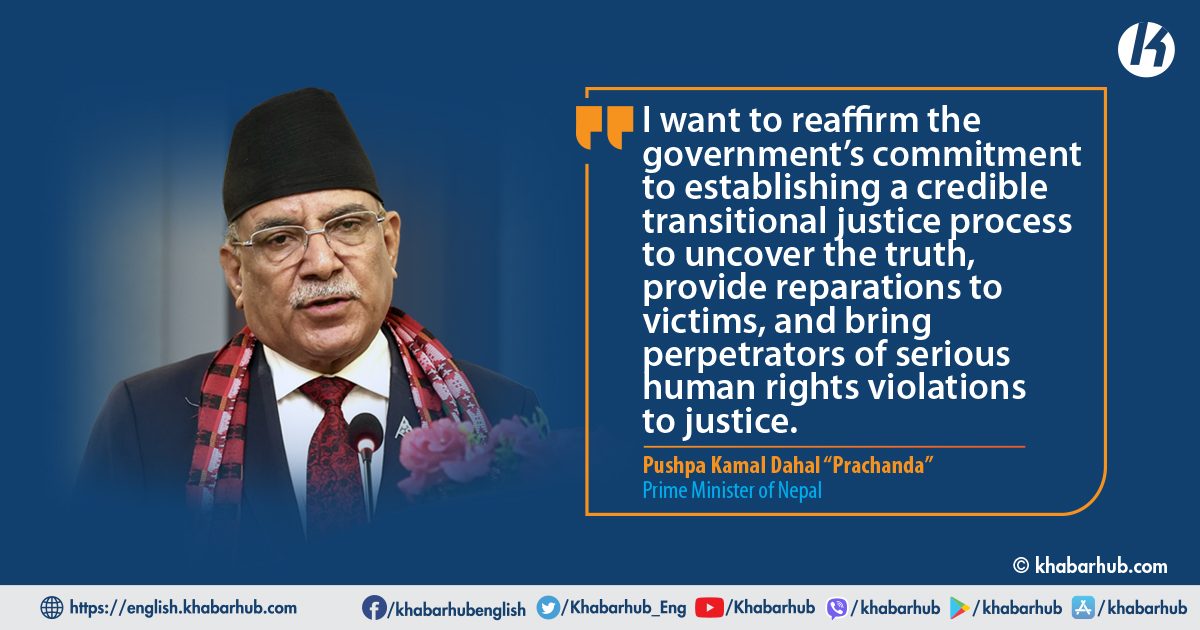
In this regard, I would like to reaffirm the Government of Nepal’s commitment to establish a credible transitional justice process in order to seek the truth provide reparation to the victims and bring perpetrators of serious human rights violations to justice so that we move towards establishing reconciliation in society.
In this endeavor, we will be guided by the Comprehensive Peace Accord, the directives of the Supreme Court of Nepal, and relevant international commitments, as well as the concerns of the victims.
For this purpose, after conducting nationwide consultation with the relevant stakeholders including the victims, an amendment to the Enforced Disappearance and Truth and Reconciliation Commission Act 2014 was tabled in the Parliament in July 2022.
Because of the expiry of the tenure of the parliament, the bill could not be passed.
After the commencement of the new parliament, the bill has been registered with some reform and now is under consideration by the parliamentary committee.
We hope that the Committee will resolve some of the issues that have been raised by the stakeholders.
This amendment opens a space for the development of a comprehensive and coherent transitional justice strategy that will allow Nepal to achieve both the greatest possible satisfaction of the rights of victims and the transition to a stable and lasting peace.
To this end, we need strong support from all walks of society including the victim, civil society, political parties and the international community.
I believe that the proposed reduction in sentencing will allow the perpetrators to come forward and tell the truth so that we can document it and archive it so as to ensure the non-reoccurrence of these incidents in the future.
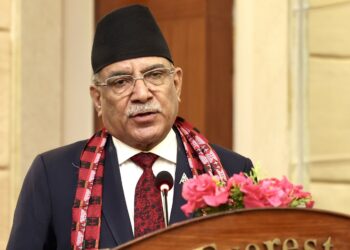
(Speech delivered by Prime Minister Pushpa Kamal Dahal Prachanda at program on sentencing policy in transitional justice in Kathmandu on Monday)





Comment