




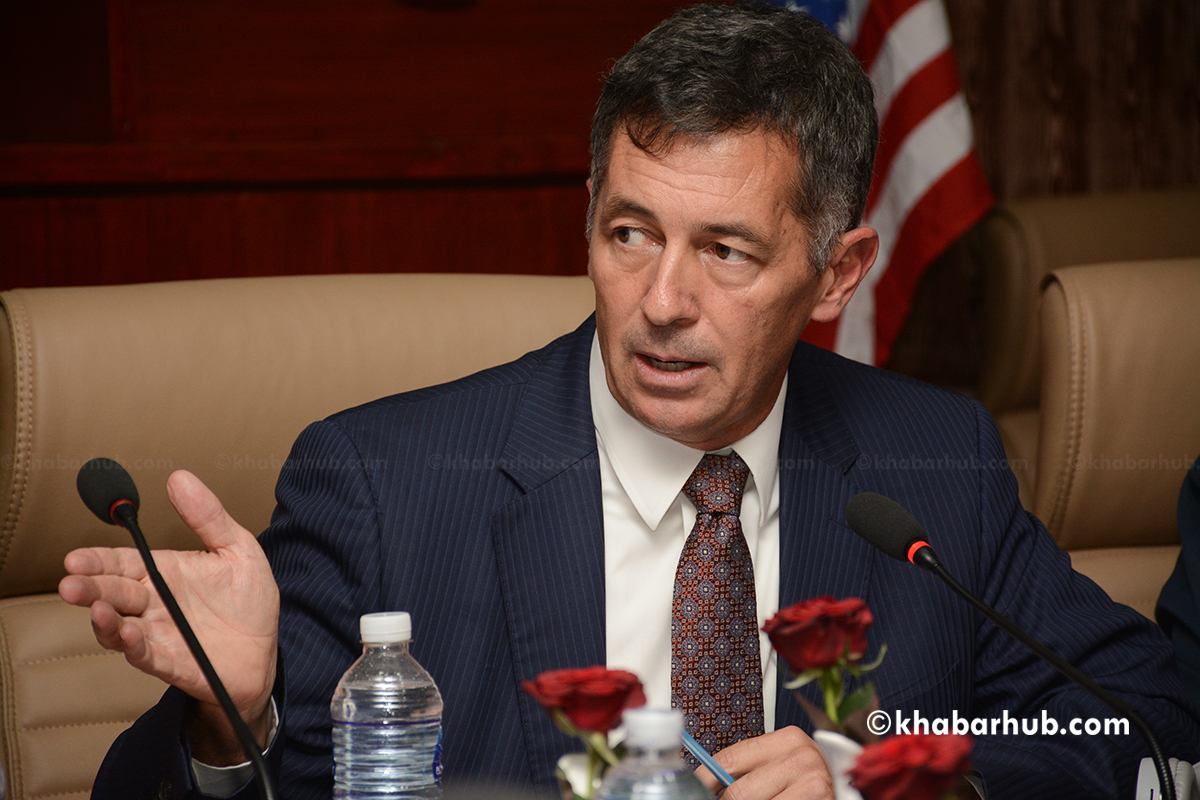
KATHMANDU: US Ambassador to Nepal Randy Berry has said that the ratification of the Millennium Challenge Corporation (MCC) Nepal Compact will help modernize Nepal’s energy and transportation sectors, assisting more than 23 million Nepalis.
He also said that the foundation of the multi-generational U.S.– Nepal relationship is people-to-people connections, sovereignty, and democratic values.
“Today, we need each other more than ever to tackle difficult issues like addressing the climate crisis and protecting democracy in the face of rising authoritarianism,” Berry said in a statement on the occasion of the 75th year of diplomatic relations between the United States and Nepal.
“We look forward to doing this together, giving us the results that this friendship has given us for generations,” he said.
This year marks the 75th year of diplomatic relations between the United States and Nepal.
“Throughout these 75 years – and through the decades of change that have occurred in both of our countries – the United States and Nepal have stood with one another,” the statement said.
Americans know Nepalis as the people who make laudable advances in medicine and science, reach nearly impossible heights as mountaineers, honorably and bravely serve as UN peacekeepers, and enrich the world’s heritage through a vast diversity of arts and culture, according to the statement.
The United States’ historic support for Nepal’s health sector reflects the powerful results of our partnership, Ambassador Berry said adding that the U.S. government through USAID, supported the Malaria Control Program and by 1968, malaria cases dropped from more than 2 million to 2,468 cases nationwide.
In the last two years since the beginning of the pandemic, the United States has donated nearly 3.8 million COVID-19 vaccine doses to Nepal to date, and given over $124.8 million in COVID assistance, the statement added.
“Finally, the United States admires the rich history of Nepal,” Ambassador Berry has said.




Comment