




KATHMANDU: Dengue cases have gone rampant in various parts of the country including in the Kathmandu Valley, according to the Epidemiology and Disease Control Division.
A total 2,108 dengue cases were recorded across the country in the past eight months, said vector control inspector for the Division, Uttam Raj Pyakurel.
In the past three months alone, the Kathmandu Valley recorded 894 cases (233 in Kathmandu, 623 in Lalitpur and 38 in Bhaktapur) while the figure was put at 754 in past one month (196 in Kathmandu, 523 in Lalitpur and 35 in Bhaktapur).
“Every day, dengue patients are being admitted to hospitals. Awareness programs should be in place,” he said.
The number of the infection cases has increased this time in Kathmandu, said Dr Bhupendra Basnet, acting administrative officer for Bir Hospital.
The hospital is treating many dengue patients, he added. The virus has been spotted mostly in most populated cities including the Kathmandu Valley and Pokhara.
Nepal first confirmed dengue cases in 2004 and since then, the infection increased in 2006, 2010, 2012, 2013, 2017 and 2019, said infectious disease specialist Dr Anup Bastola.
Spotted mostly in the Tarai belt, it gradually started spreading to other parts too including Pokhara and Kathmandu since 2018, he said.
“Lately, the number of mosquitoes has increased in the Kathmandu Valley. So dengue patients have increased.”
Shukraraj Tropical and Infectious Disease Hospital is treating 22 dengue patients at present, said the hospital chief consultant physician Dr Bimal Chalise.
Similarly, Civil Hospital is taking care of 19 dengue patients, said the hospital director Dr Bidhannidhi Paudel.
The hospital directed management of nets for patients at hospital to be safe from the bites of mosquitoes, he said.
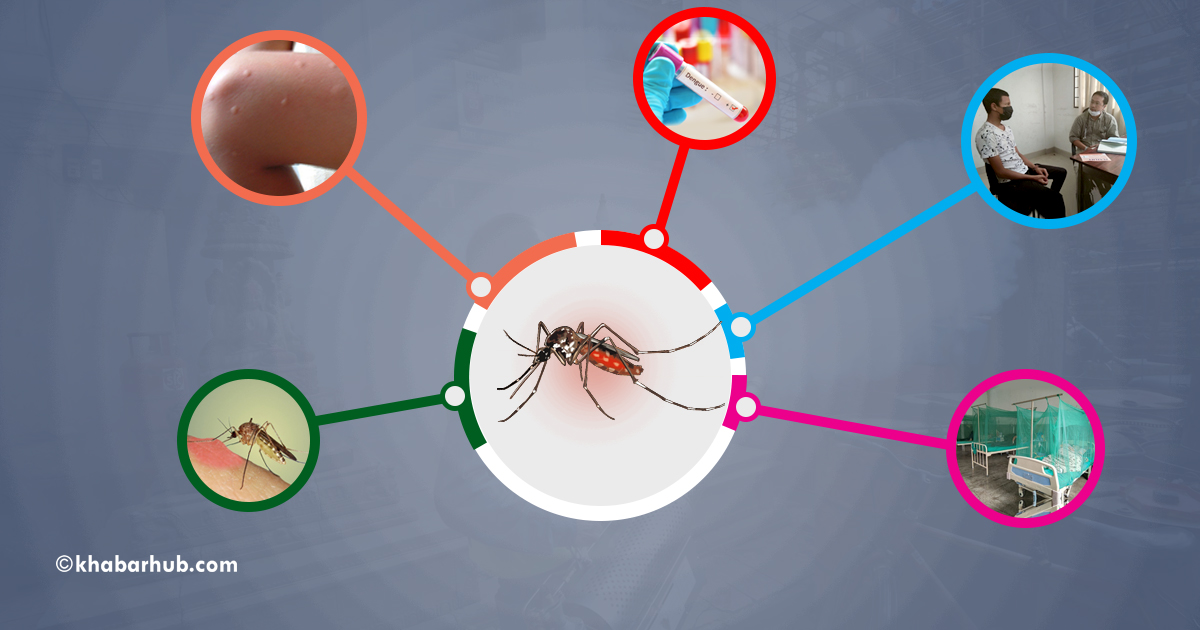
“The infection is transmitted by the bites of infected female mosquitoes mainly of the Aedes aegypti and Aedes albopictus species that reside in pools. The Kathmandu Valley has been witnessing increasing dengue cases due to temperature rise,” he said.
Generally, the infection risks occur between mid-July and mid-October, he said. Out of 10,000 infected cases, 1,000, for an example, showed symptoms, according to Dr Bastola.
Common symptoms include fever, nausea, vomiting, rashes, aches and pains (eye pain, muscle, joint and bone pain) that last two to seven days in general.






Comment