




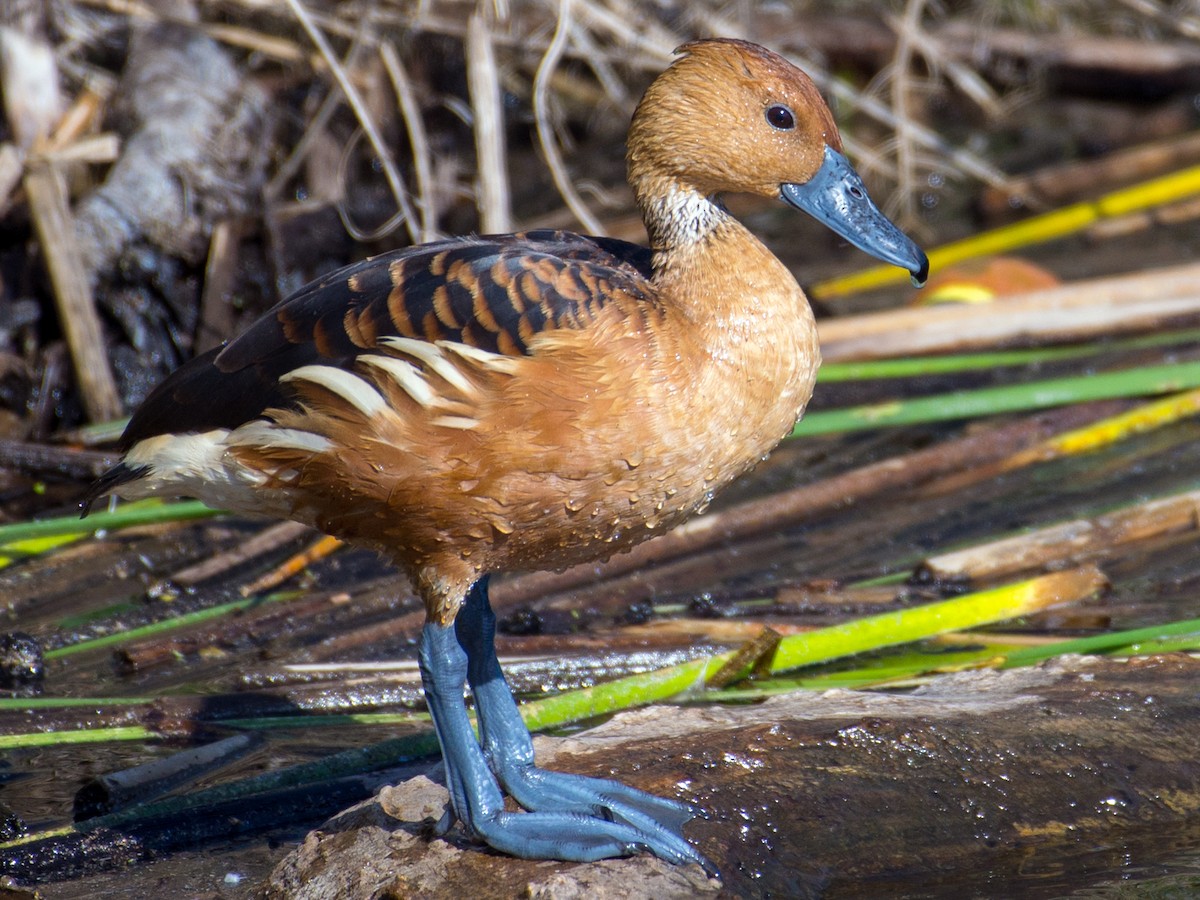
BELBARI: The Fulvous whistling duck has been lately observed in the Koshi Tappu Wildlife Reserve.
The bird of this duck species, which was last seen in the year 2000, has returned back after 22 years.
The duck is among the many the winter migratory birds that come to Nepal October onwards before returning to their destination in mid-March.
This year too, about 70 species of birds have come to Koshi Tappu. However, the number of tourist birds coming to the reserve has declined, it would be more than a hundred previously, says Ornithologist Anish Timsina.
“Even though there is still some time for birds to arrive, there has been a decrease compared to last year”, says Timsina.
Located at the confluence of Sunsari, Saptari and Udayapur districts, the Koshi Tappu Wildlife Reserve has become the bird capital of Nepal.
Out of 888 birds found in the country, 531 birds have found their home in the reserve.
“Increasing human settlement and adverse human behavior may be the main reason for the decrease in the number of migratory birds,” said Rajkumar Singh, chair of the Kositappu Wildlife Reserve Buffer Zone Management Committee.
According to him, plants such as water hyacinth, ‘Mycania’, which have completely covered the wetlands, have affected the birds of the duck species.
Licensed fishing is allowed in the reserve area, which poses a risk to the birds. Lack of proper habitat and adequate food for birds is another problem.
With the onset of snowfall in the North Pole, thousands of migratory birds migrate to the lower Himalayan regions, mountains and plains of Nepal and around lakes, ponds and rivers to escape the growing cold.
There are statistics that every year about 150 species of birds come to Nepal from Russia, Kyrgyzstan, Turkmenistan, Uzbekistan, Azerbaijan, China, Mongolia as well as from Europe and Korea.
Winter migratory birds come to spend the winter in the major wetlands of Nepal including the Koshi Tappu Wildlife Reserve, Chitwan National Park, Bisahajari lake, Jagdishpur, Ghodaghodi Lake, Shuklaphanta Wildlife Reserve and Kosi, Gandaki, Narayani River and their tributaries.
Likewise, thousands of summer migratory birds also come to Nepal from southern countries and Africa.
These birds raise their young ones and return to their old habitat before October.
The main habitat of the summer migratory bird is the forests and surrounding grasslands and agricultural land.
RSS






Comment