




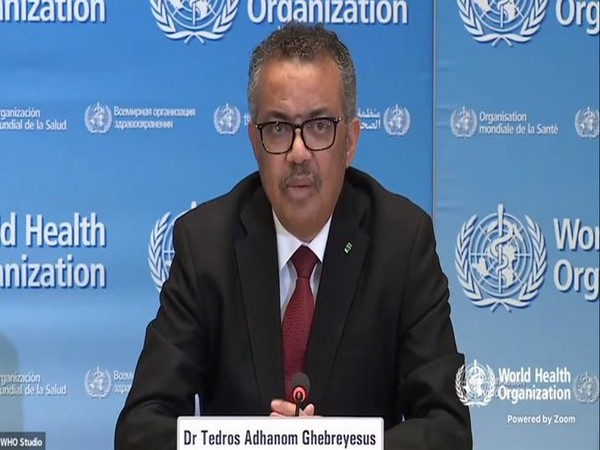
GENEVA: The World Health Organization (WHO) has reconvened the Monkeypox Emergency Committee to assess the public health implications of the evolving multi-country outbreak.
This comes as global cases passed 14,000, with six countries reporting their first cases last week.
The committee first met last month but decided against declaring it a public health emergency of international concern.
On Thursday, WHO chief Tedros Adhanom Ghebreyesus acknowledged his “acute” awareness that any decision regarding the possible determination involves “the consideration of many factors, with the ultimate goal of protecting public health”.
The committee has already helped “delineate the dynamics of this outbreak,” he said in his opening remarks to committee members and advisors. “As the outbreak develops, it’s important to assess the effectiveness of public health interventions in different settings, to better understand what works, and what doesn’t”.
Monkeypox, a rare viral disease, occurs primarily in tropical rainforest areas of Central and West Africa, though it has been exported to other regions. This year, more than 14,000 cases have been reported across 71 Member States, from all six WHO regions.
Tedros revealed that six countries reported their first cases last week and that the vast majority continue to be among men who have sex with men. “This transmission pattern represents both an opportunity to implement targeted public health interventions, and a challenge because in some countries, the communities affected face life-threatening discrimination,” he said.
He warned of “a very real concern” that men who have sex with men could be “stigmatized or blamed…making the outbreak much harder to track, and to stop”.
“As many of you know from your deep engagement with these communities, there is a very real concern that men who have sex with men could be stigmatized or blamed for the outbreak, making the outbreak much harder to track, and to stop,” the WHO chief said.
He further affirmed that one of the most powerful tools against monkeypox is information, “The more information people at risk of Monkeypox have, the more they are able to protect themselves,” Tedros said.
“Unfortunately, the information shared with WHO by countries in West and Central Africa is still very scant”. The inability to characterize the epidemiological situation in those regions represents a “substantial challenge” to designing interventions which can control the historically neglected disease.
The UN health agency is working closely with affected communities in all its regions and as the outbreak evolves, has called for increased, “targeted and focused” access to all counter measures for the most affected populations. (ANI)




Comment