




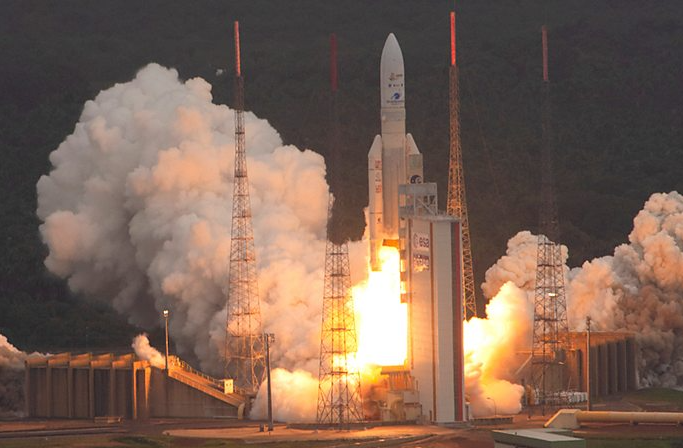
The James Webb Telescope, travelling at 1.39 kilometers per second in the vacuum of space, is currently headed to a destination that humans will not see it again, which means that it will go as far as 15,00,000 kilometers away from Earth.
Just two days after it soared into skies following its launch, the telescope has covered more than 23 per cent of its journey to the location known called the second Lagrange point.
It is on a 30-day long journey and its intended orbit and is expected to reach the location by the end of January 2022.
The telescope includes its high-data-rate dish antenna, which will be used to send at least 28.6 gigabytes of science data down from the observatory, and that, too, twice a day.
According to NASA, engineers released and tested the motion of the antenna assembly, and the entire process took nearly one hour.
It will begin six months of commissioning in space and at the end of commissioning it will start delivering its first images.
Where is it headed to?
This telescope will not orbit the Earth. It is headed to a location called the second Lagrange point from where it will observe the universe.
NASA said that the Lagrange points are the positions in space where objects sent tend to stay put.
At the Lagrange points, the gravitational pull of two large masses precisely equals the centripetal force required for a small object to move with them, according to NASA.




Comment