




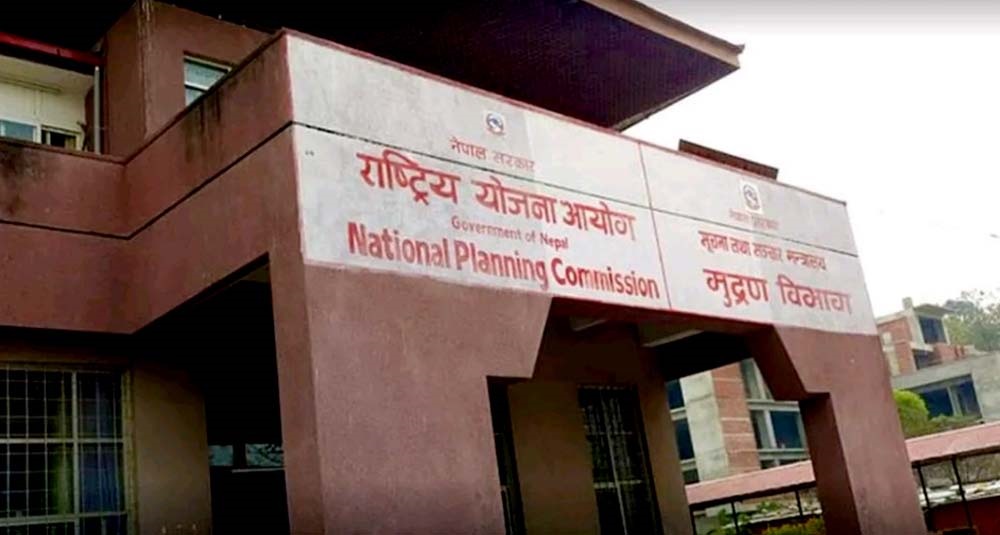
KATHMANDU: Nepal’s economy has faced a loss of Rs 322 billion during the COVID-19 pandemic.
According to a study conducted by the National Planning Commission (NPC), the pandemic has caused a loss of Rs 166 billion in annual production growth.
Due to the overall loss, the economic growth rate has been limited to 0.6 percent last year.
The Central Statistics Office had projected a growth rate of 2.27 percent last year. The NPC study estimates that the growth rate will be less than the projection.
The NPC concluded that the COVID-19 had slowed down economic activity, reduced production, and employment.
It is said that strategic investment is needed in various sectors to restore all these indicators.
The commission has decided to invest in transition control and relief, employment, project continuity, development, and adoption of new systems and increase self-reliance.
A total investment of Rs 665 billion will be required for short-term, medium-term, and long-term investment in transition control and relief, employment, project continuity, development and adoption of new systems and increase self-reliance.
According to NPC, Rs 92 billion will be required to restore employment, Rs 269 billion for transition control and relief, Rs 114 billion for project continuity, Rs 119 billion for new system development, and Rs 73 billion for self-reliance.






Comment