




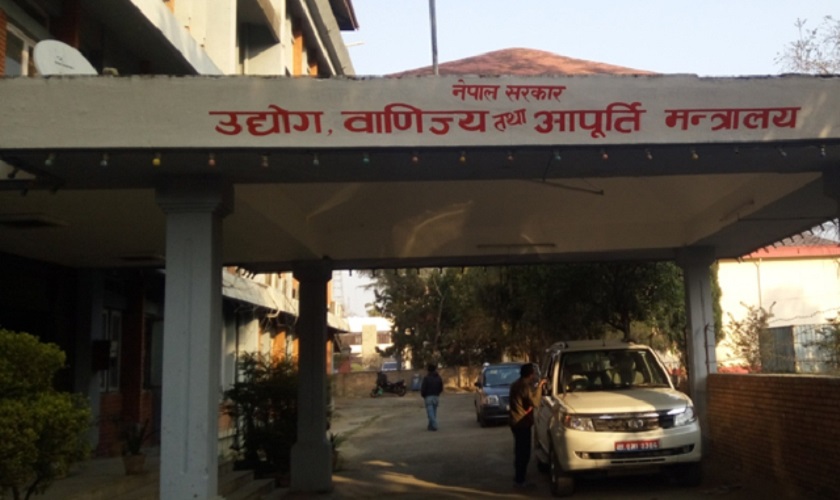
KATHMANDU: With the prolonged lockdown in the country, the production capacity of the country’s industries has severely decreased.
In a report released by the Ministry of Industry, Commerce and Supplies, operation of the industries has shriveled compared to the initial days of the lockdown.
It should be noted that during the initial days in March end and the first week of April, some 49 to 51 per cent of the industries were brought into operation across the country, according to Ministry’s Spokesperson Prakash Dahal.
About 49 per cent of the industries were operated during the initial 30 days of the lockdown in five major industrial corridors such as the Nepalgunj-Kohalpur Industrial Corridor; Attariya-Dhangadhi Industrial Corridor; Pathaliya-Birgunj Industrial Corridor, Butwal-Belhiya Industrial Corridor; and Itahari-Biratnagar Industrial Corridor.
During this period, out of 597 industries producing highly-essential goods, only around 150 industries had continued their operations.
According to the report, the industries had employed around 5,190 workers prior to the enforcement of the lockdown. However, after one month, only 1,602 workers were employed.
Similarly, only 51 per cent of these industries operated from April 25 to May 13.






Comment