




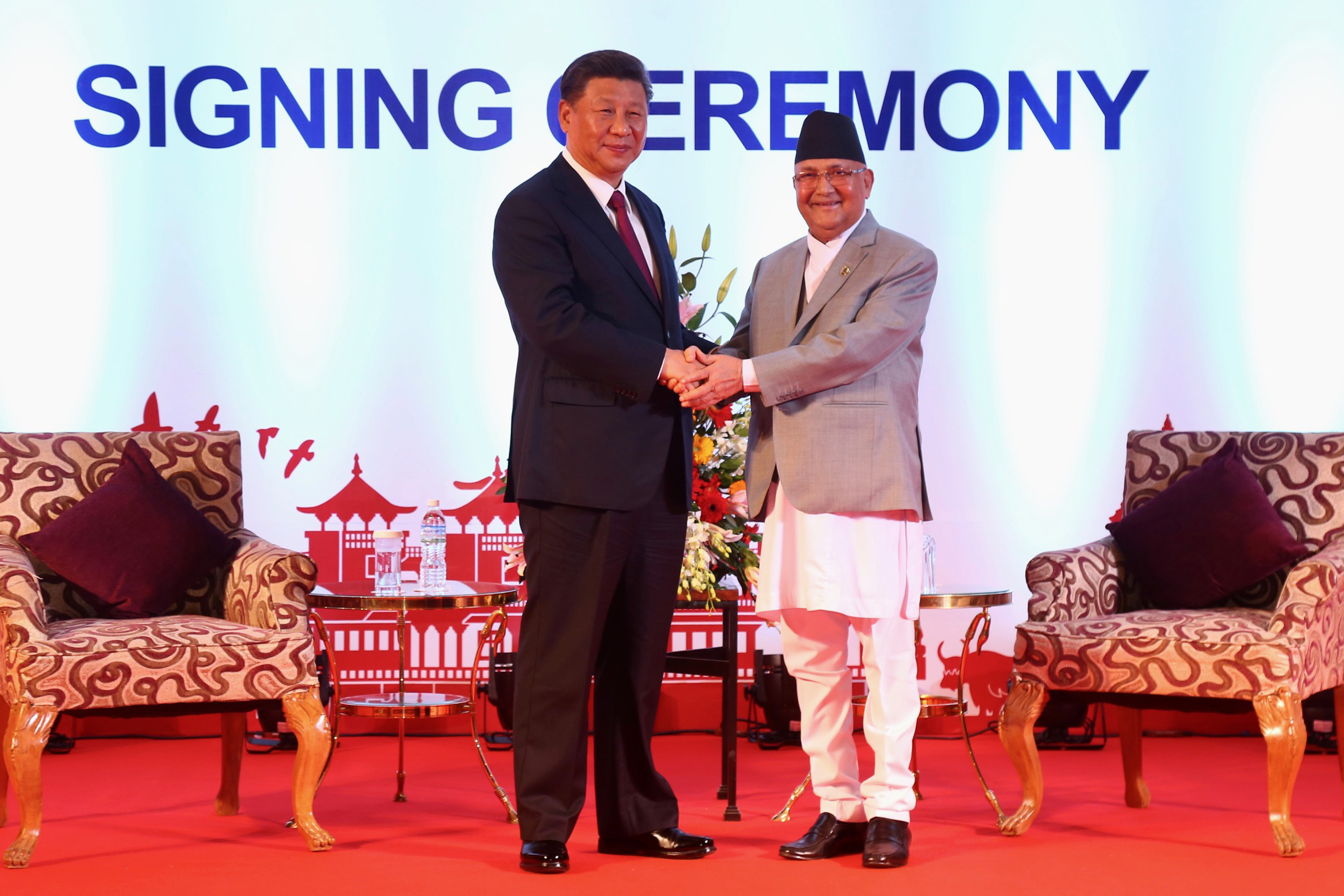
KATHMANDU: The government-owned Hydroelectricity Investment and Development Company Ltd (HIDCL) and China’s Power China are jointly going to construct two reservoir-type hydroelectricity projects in Nepal.
The total cost of the two projects has been estimated to be over Rs 200 billion.
A memorandum of understanding to this effect was made in Kathmandu on Sunday in course of Chinese President Xi Jinping’s two-day state visit to Nepal.
According to Barsa Man Pun, Minister for Energy, Water Resources and Irrigation, the projects include the 762-Megawatts-capacity Tamor Project in Province 1 and the 157-Megawatts-capacity Madikhola Project located in Rolpa of Province 5.
The HIDCL and Power China, in the proposal, presented to the Investment Board Nepal, have proposed several models for the construction of the two projects.
Minister Pun said all preparations for the construction of the two projects would be concluded within the next year.
Meanwhile, according to Chief Executive Officer of HIDCL, Chhabiraj Pokharel, the Tamor project would be constructed in the government to a government partnership model.
This is the first time that an MoU has been signed to construct projects through collaboration between the government companies of Nepal and China.






Comment