




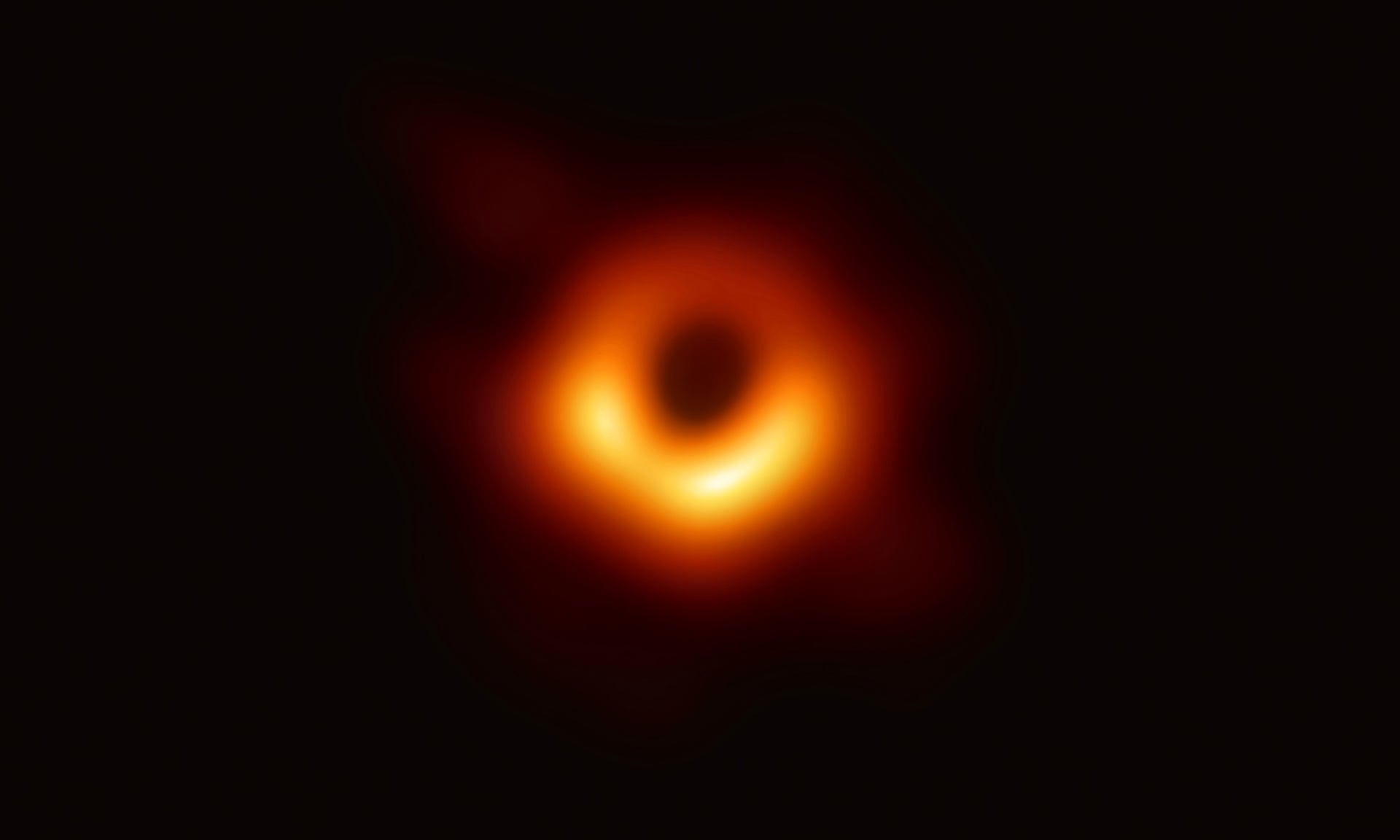
Black hole is a volumes of space where gravity is extreme enough to prevent the escape of even the fastest moving particles, not even light can break free. Therefore, it is called ‘black’ hole.
In 1915, a German physicist and astronomer Karl Schwarzschild proposed the modern version of a black hole when he came up with a solution to Einstein’s approximations of general relativity, and realized it was possible for mass to be squeezed into an infinitely small point.
This would make the space time around it bend so that nothing could escape its curvature, not even massless photons of light.
All masses, theoretically, have a Schwarzschild radius, which can be calculated. If Earth’s mass would have a Schwarzschild radius of just a few millimetres, making a black hole no bigger than a marble.
Black holes were exotic peculiarities of general relativity. It’s believed that most galaxies have monstrous black holes at their core.
How do they form?
It has been said that stars with a mass at least three times greater than that of the Sun mass can undergo gravitational collapse once their fuel depletes.
With the mass in a confined volume, the collective force of gravity overcomes the rule, which usually keeps the building blocks of atoms from occupying the same space. And this density creates a black hole.
(With inputs from Sciencealert/Agencies)






Comment